Home heating oil is a refined petroleum fuel closely related to diesel. Understanding what it is and how your furnace or boiler uses it makes everything else about oil heat easier to manage.
What is home heating oil?
The fuel that warms most oil-heated homes is No. 2 fuel oil, a distillate refined from crude oil. Chemically it is almost identical to on-road diesel, differing mainly in additives and, historically, in sulfur content and dye. It is an energy-dense liquid: a single gallon holds roughly 138,000 British thermal units (BTUs) of energy, notably more per gallon than propane. That density is exactly why oil suits cold climates, where a home may burn through a great deal of fuel across a long heating season.
Heating oil is also stable and safe to store. Unlike gasoline, it is not highly volatile — it will not ignite from a spark at ordinary temperatures and instead must be atomized into a fine mist and sprayed into a hot combustion chamber before it burns. This is part of why a large reserve can sit safely in a basement or yard tank.
Ultra-low-sulfur and renewable blends
The heating oil sold today is cleaner than the fuel of a generation ago. Ultra-low-sulfur heating oil has dramatically reduced sulfur content, which cuts emissions and leaves far less residue inside the system. Increasingly, suppliers also blend in renewable, plant- and waste-derived components — a product often marketed as bioheat — which lowers the carbon footprint of each gallon while burning cleanly in existing equipment.
How an oil furnace works
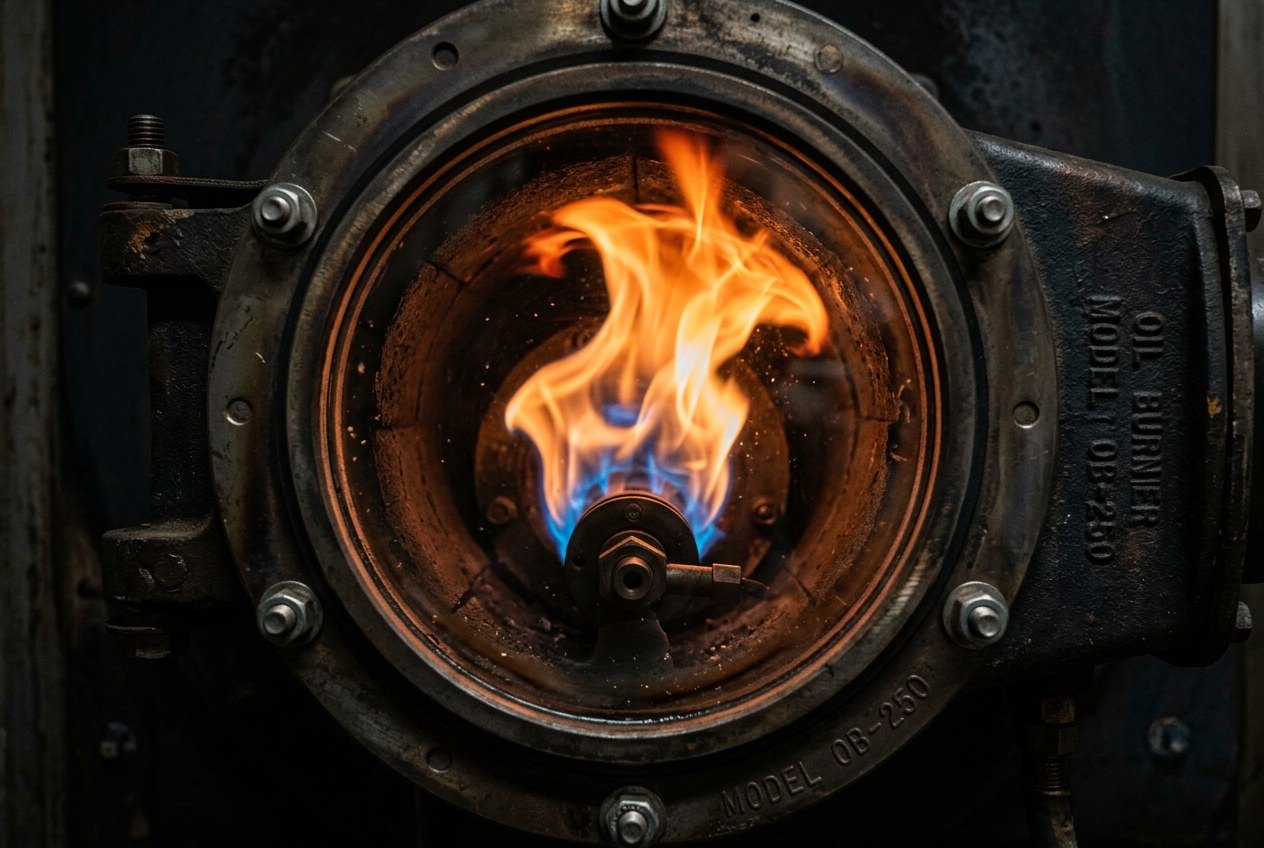
An oil furnace heats air and distributes it through ductwork. When the thermostat calls for heat, a fuel pump draws oil from the tank and pushes it, under high pressure, to a nozzle at the burner. The nozzle atomizes the oil into a fine spray, which mixes with air forced in by a blower. An electric igniter or transformer creates a spark that lights this mist, producing a controlled, roaring flame inside the combustion chamber.
That flame heats a metal heat exchanger. A separate blower pushes household air across the outside of the hot heat exchanger — never through the flame or exhaust — warming it before it travels through the ducts to your rooms. Combustion gases are vented safely up the flue. Because the air and the exhaust stay separate, your home gets clean warm air while the byproducts of burning leave the building.
How an oil boiler works
An oil boiler follows the same combustion principle but heats water instead of air. The burner fires into a chamber surrounded by water, and a circulator pump moves that hot water through pipes to radiators, baseboard units, or in-floor tubing around the house. The water gives up its heat to each room and returns to the boiler to be reheated.
Boilers are common in older Upper Midwest homes and are prized for the steady, even warmth of hydronic heat. Many also produce domestic hot water, either through an internal coil or a connected storage tank.
Efficiency and the AFUE rating
A heating system's efficiency is measured by its Annual Fuel Utilization Efficiency, or AFUE — the percentage of fuel energy that becomes usable heat. Older units might land in the 60s or 70s, while modern high-efficiency oil furnaces and boilers reach the mid-80s and above. A higher AFUE means more of every gallon you buy ends up warming your home rather than escaping up the flue.
An annual professional tune-up — cleaning the nozzle, filters, and heat exchanger and checking combustion — is the single best way to keep efficiency high and prevent breakdowns.
The parts that matter most
- The burner and nozzle atomize and ignite the fuel; a clogged nozzle is a common cause of poor performance.
- The fuel filter catches debris before it reaches the nozzle and should be replaced regularly.
- The heat exchanger transfers combustion heat without mixing exhaust into your air.
- The flue vents byproducts safely outdoors.
These parts are simple in principle, but they work in a demanding environment — firing thousands of times over a season, often for hours on end during a cold snap. That is why routine attention to the consumable parts, the nozzle and filters in particular, pays off so reliably. Small deposits and a slightly worn nozzle are the difference between a burner that fires cleanly and one that runs rough, wastes fuel, and eventually fails.
Once you know how the fuel and the equipment work together, the rest of oil heat falls into place. Next, learn how to look after the fuel itself on the tank care page, see how oil stacks up against other options in oil vs. propane vs. gas, or make sure you are ready for the season with winter prep. For how fuel actually reaches your home, see delivery and supply.